Executive Summary
What was found
- With the advent of the COVID-19 pandemic, many tech companies transitioned to completely working from home.
- People are increasingly using more and more devices today.
What it meant
- They are comfortable working from home, with the range of available capable devices.
- Multitasking involved a lot of swapping between devices.
What's next?
- Companies interestingly didn't take much of a hit with having the business running.
- Interestingly they started sponsoring all their employees to purchase necessary furniture for their home workspace.
- They also saw the interesting potential in forgoing office spaces all together, and saving rent expenses in the millions.
The Story...
Research
- We are seeing an exponential rise in the number of devices used by the average user.
- With budding trends like the Internet of Things (IoT), this number is only expected to grow.
- Speaking of the Internet, most work today is collaborative.
Trends
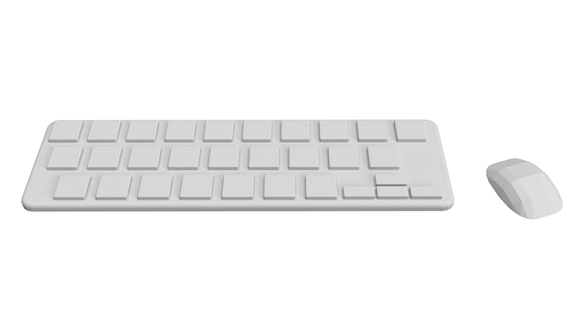
- The keyboard and the mouse as we know it haven't changed much since the 1980s.
- They have stood the test of time irrespective of the screen size.
- Any change in these devices would require the user to go through a steep learning curve.
- 60% of the users don't even look at the keyboard while typing.
- Users have also begun touch typing on phones.
Persona
- We have to look at the target audience who would likely benefit from this innovation.
- The innovation caters to the needs of technology users, users who multitask, those who are health conscious, space conscious, care about their privacy and those who work with multiple screens.
User Journey
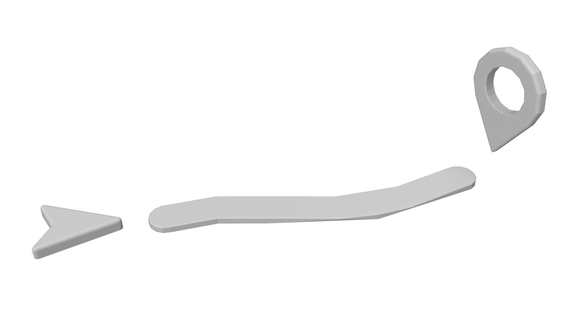
- Users like to multitask, their primary device to do so is by buying external monitors.
- Since these are peripherals, there is a restriction of physical space.
- Multitasking is generally done within one device, which predominantly are laptop computers.
- Users also have jobs to be done using other devices like phones and tablets.
- Ideal journey would be to buy one device to interact and control multiple devices.
- Ideal journey would not limit the user due to physical space restrictions.
- Ideal journey would also be to make the setup be robust and highly portable.
- Finally, the solution also has to be affordable.
Business Model
- Created a business model of FREE.
- Inspired to design it free to flatten the adoption curve.
- Challenge was to provide a high quality product for free.
- High quality products were an absolute necessity to ensure a great user experience.
The Customer
- An interesting inspiration was the fact that the user need not be the customer.
- The apt customer was the employer who invested in multitasking equipment for its employees.
- On an average a company spends $5000 per employee per month for their productivity.
- With COVID many opted to work from home. A change that is going to last.
- Making this the perfect time for this innovation.
- The state of the art device that can deliver on the user experience costs $4000. This is a mixed reality device.
- This would be a one time purchase, potentially saving $4666.66 per employee per month. Overall saving the company in millions of dollars a year.
- The consequence of this approach is that the users get the product for free, while the companies still benefit as employees(users) can collaborate virtually from home. Achieving the same productivity for 1/12 the cost per employee per month.
- The competition to this approach is the real estate industry.
Value Chain
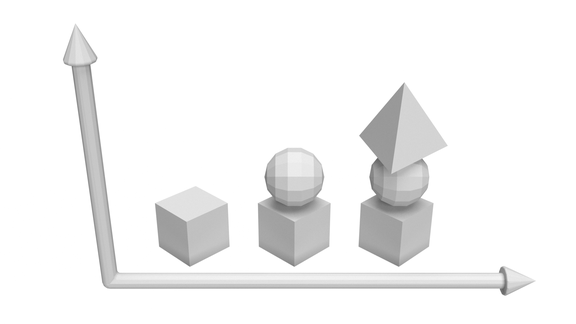
- The impact of such a service would expel the need for office spaces.
- Eliminating this cost in the value chain of the customers(the employers) is the value delivered to them.
- Most benefited would be the startups who wouldn't need a high initial investment in procuring computing resources. Enabling them to get more done with their initial funding.
The Value Proposition
- Best in class XR headset for free.
- Users may be able to connect to multiple devices.
- View and multitask among all the devices from one place.
- Teams can collaborate in augmented reality(AR) from the comfort of their homes.
Frameworks Used
- User Personas
- Red Ocean Blue Ocean
- Journey Maps
- Competitive Analysis
- Double Diamond Approach
- SWOT Analysis
- Business Model Canvas
- 4 Corner Graph
- Strategy Map
User Testing
- “This is not at all what I had pictured 😀 something like this would be cool”
- “Can’t wait! 😍”
- “I think it can be a very subjective experience 🙂”
- “What is the need?🤔”
- “Wow. Pretty !”
- “Are you crazy? I feel claustrophobic!”
- “It looks convenient and one stop place.”
- “How much is your product? I need one soon.”